
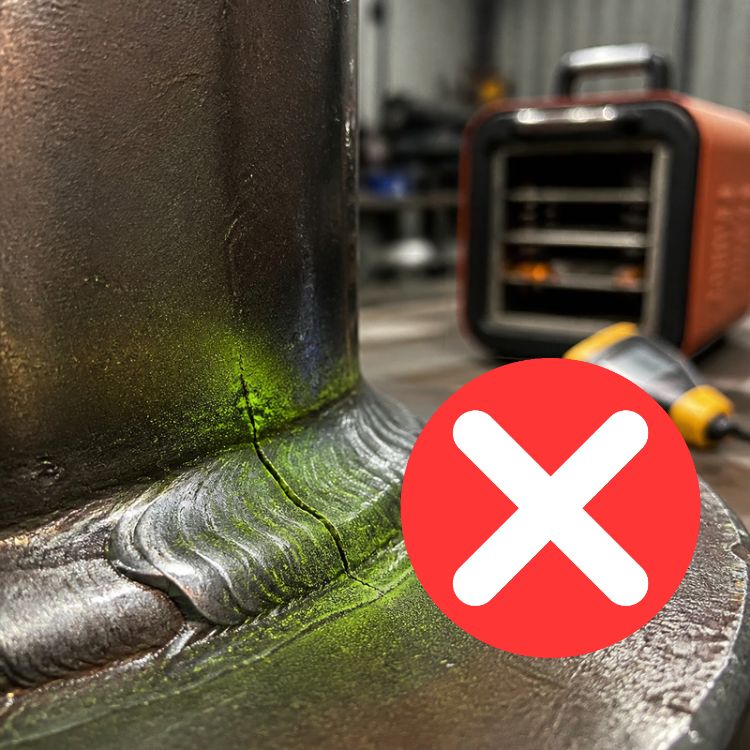
Hydrogen Cracking in Industrial Welding: Why a Sound Weld Can Fail Hours Later
One of the most frustrating welding failures is a crack that does not appear during welding or immediate inspection, but develops hours later. Hydrogen-assisted cracking can occur when diffusible hydrogen, a susceptible microstructure, and tensile stress combine in the same region. Because the defect may be delayed, prevention must be built into the welding process from the beginning.
Where the Hydrogen Comes From
Moisture is a major source. Damp electrodes, contaminated fluxes, wet joint surfaces, oil, paint, and atmospheric exposure can introduce hydrogen into the arc and molten weld pool. Consumable handling and surface preparation are therefore part of crack prevention.
Hard Microstructures Increase Susceptibility
Rapid cooling in certain carbon and low-alloy steels can create hard heat-affected zones. Thick material, low ambient temperature, and high heat-sink conditions can accelerate cooling. Preheat and controlled heat input help manage this response.
Stress Completes the Problem
Heavy restraint, weld shrinkage, fit-up force, and component geometry can create tensile stress around the joint. Even a weld with acceptable appearance can crack if enough stress is present while hydrogen remains trapped in a susceptible region.
Inspection Timing Matters
Because cracking can be delayed, some specifications require a waiting period before final magnetic-particle, penetrant, or other examination. Immediate inspection alone may not detect a crack that has not formed yet.
- Keep low-hydrogen consumables dry and controlled
- Remove moisture, oil, paint, and contamination
- Apply required preheat
- Avoid unnecessary restraint and forced fit-up
- Respect specified delayed-inspection intervals


Leave a Reply
Want to join the discussion?Feel free to contribute!