Weld Repair or Component Replacement? How Industrial Teams Evaluate the Decision
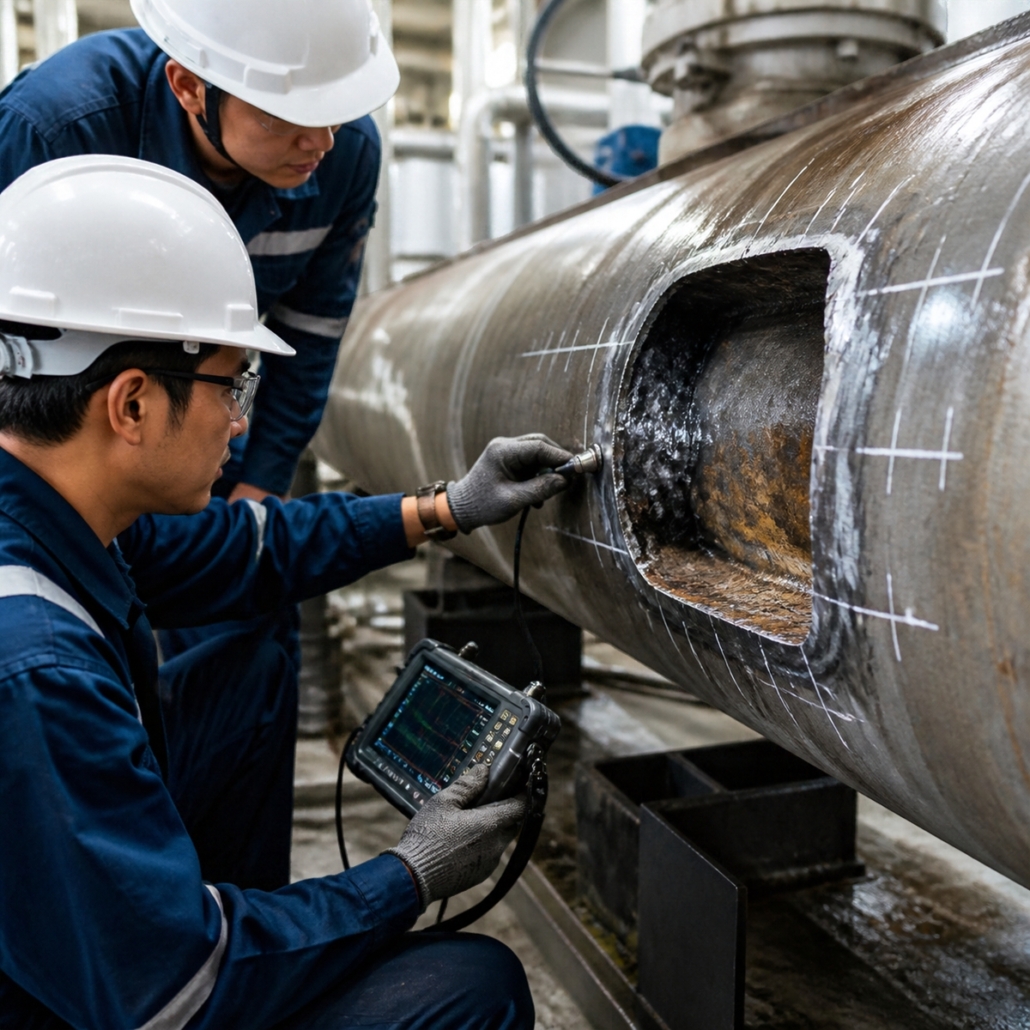
Finding a crack, thin area, eroded surface, or rejected weld does not automatically mean the component should be repaired. It also does not automatically mean it should be replaced. Industrial repair decisions require an evaluation of the damage mechanism, remaining material, service conditions, accessibility, code requirements, outage schedule, and the quality that can realistically be achieved in the field.
First Identify Why the Damage Occurred
A repair that restores geometry but ignores the cause may simply recreate the same failure. Corrosion, vibration, thermal fatigue, creep, erosion, poor support, process chemistry, and original fabrication defects require different responses.
Sound Material Must Remain After Excavation
Crack removal or defect excavation can reduce local thickness. Before welding begins, the team must know whether sufficient sound base material remains to support the approved repair design.
Field Access Can Change the Best Option
A repair that is simple on a fabrication table may be extremely difficult inside a vessel, furnace, exchanger, or congested piping rack. Restricted access affects preparation, welding position, heat control, inspection, and the ability to remove defects completely.
Repeat Repairs Need Special Attention
Repeated heating and excavation can alter local properties, enlarge the heat-affected zone, and consume dimensional tolerance. A location with multiple previous repairs should be evaluated as a history, not as a fresh isolated defect.
- Determine the actual damage mechanism
- Confirm remaining wall and repair geometry
- Review material and service history
- Verify welding and inspection access
- Compare repair risk with replacement scope


Leave a Reply
Want to join the discussion?Feel free to contribute!