
How Rigging and Fit-Up Influence Weld Quality on Heavy Industrial Components (copy)
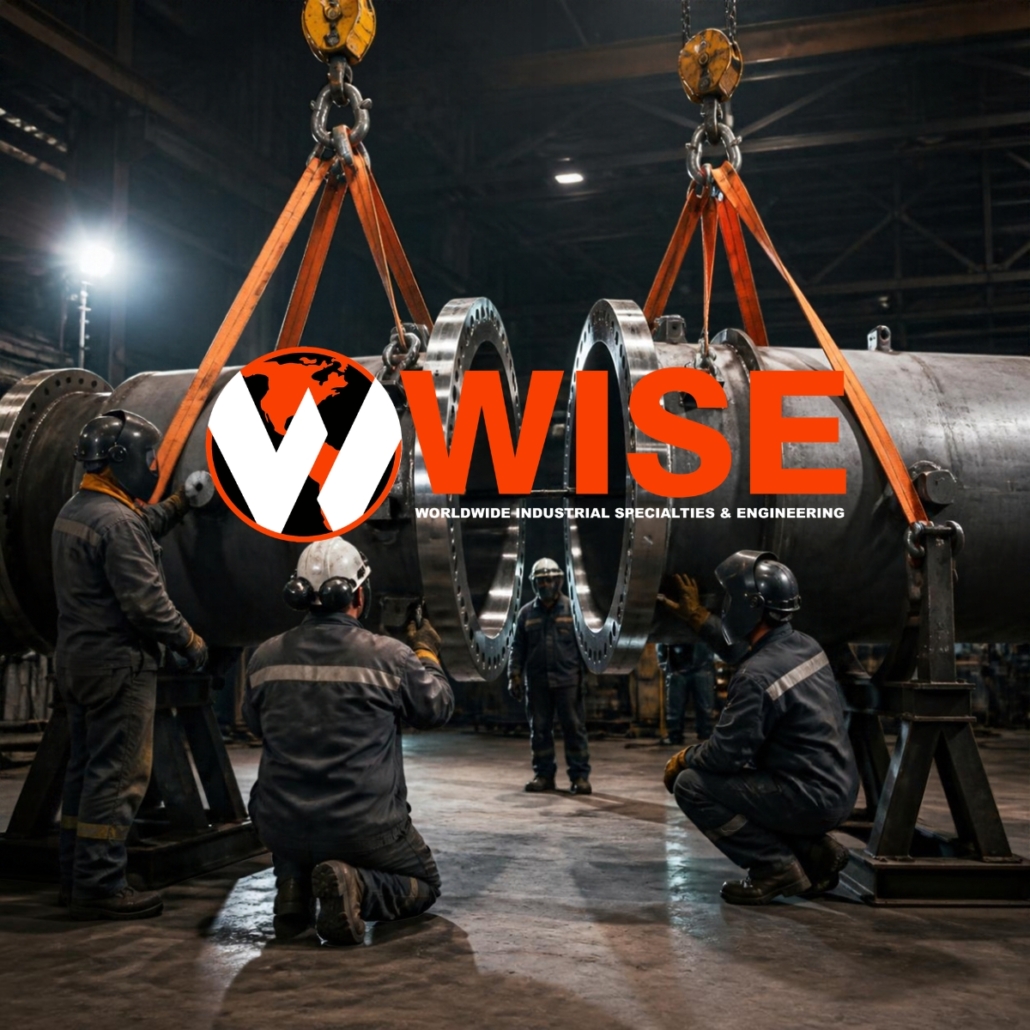
Rigging is commonly viewed as the activity that moves a component into place. In heavy industrial welding, it also helps establish and preserve the geometry of the joint. Poor load control or an incorrect release sequence can create mismatch, restraint, distortion, and access problems that appear later as welding difficulties.
The Joint Must Be Stable Before Welding
Heavy piping, furnace components, structural assemblies, and equipment parts can shift under their own weight. Supports, hoists, come-alongs, and fixtures should hold the joint in the intended position without creating uncontrolled stress.
Alignment Should Not Depend on Weld Shrinkage
A weld should not be used to pull a major mismatch into place. Doing so increases residual stress and can distort surrounding geometry. Rigging and fit-up should establish acceptable alignment before production welding begins.
Restraint Changes Shrinkage Behavior
Every weld contracts as it cools. Highly restrained joints may develop greater residual stress, while insufficient support can allow movement and loss of alignment. The temporary support plan should consider how the joint will behave throughout the welding sequence.
Access Must Be Protected
Slings, chains, fixtures, and lifting devices can block torch movement, inspection surfaces, or safe body position. A lift plan that only considers final location may unintentionally make the weld harder to execute and examine.
Release Sequence Is Part of the Work
Removing support too early can transfer load into a joint before it has cooled or before the assembly is complete. Keeping unnecessary restraint too long can also interfere with later work. The sequence should align with welding, inspection, and structural requirements.
- Control component weight and movement
- Establish alignment before welding
- Consider shrinkage and restraint
- Preserve welding and inspection access
- Plan when temporary supports are released

Leave a Reply
Want to join the discussion?Feel free to contribute!