Why Joint Preparation Determines the Quality of an Industrial Pipe Weld
Many welding problems begin before the arc is struck. In industrial piping, the condition and geometry of the joint influence penetration, fusion, distortion, root profile, and the welder’s ability to follow the qualified procedure. Good technique cannot fully compensate for poor preparation.
Bevel Geometry Controls Arc Access
The bevel angle and land create the working space needed to reach the root and sidewalls. A groove that is too narrow can limit electrode access and increase the risk of incomplete fusion. A groove that is unnecessarily wide increases weld volume, heat input, filler-metal use, and time.
Root Opening Must Be Consistent
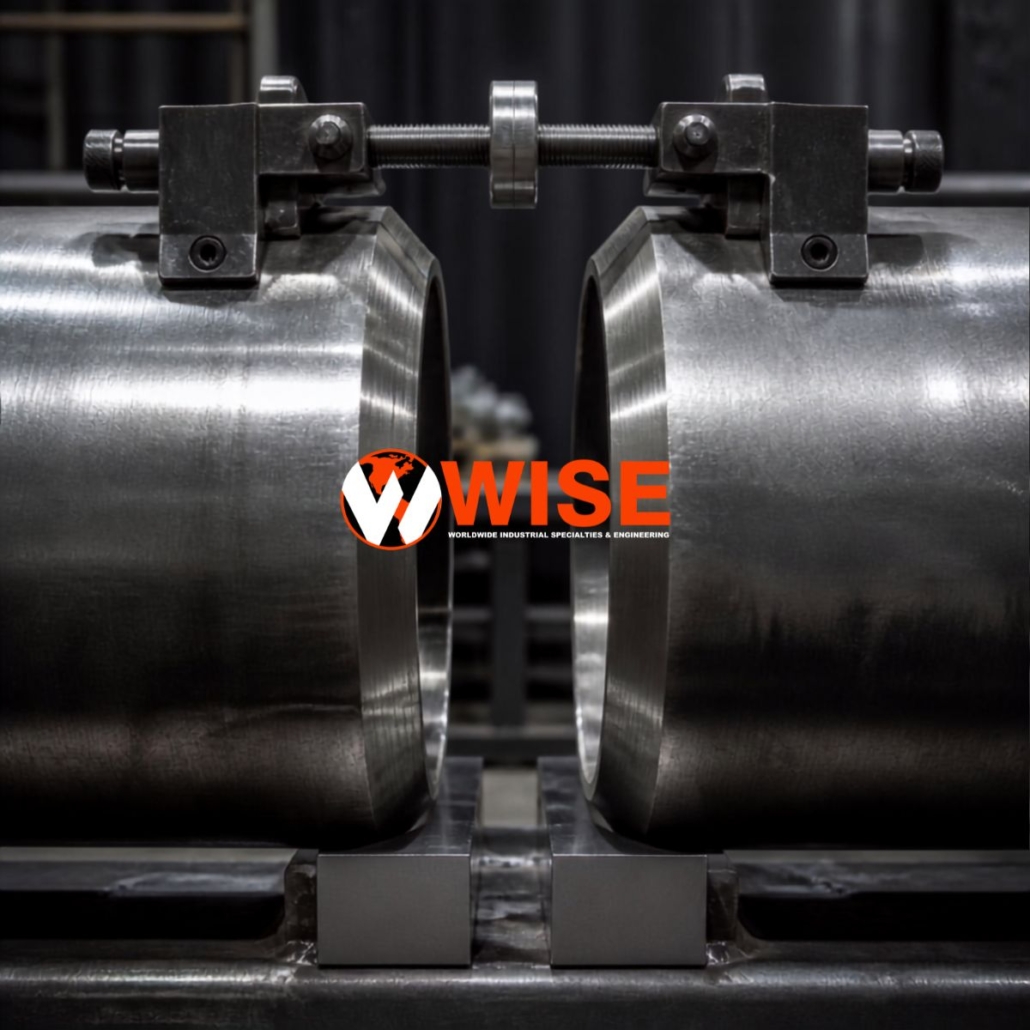
The root gap affects penetration and the shape of the internal bead. Large variations around the circumference force the welder to constantly change travel speed, arc length, and filler addition. Consistent fit-up allows the procedure parameters to work as intended.
Alignment Is a Quality Issue
Internal mismatch changes the local wall profile and makes a uniform root bead more difficult. It can also concentrate stress and complicate inspection. Proper alignment tools and careful measurement help maintain the required geometry before tacking.
Cleanliness Protects the Weld Pool
Oil, paint, moisture, oxides, cutting residue, and embedded contamination can produce porosity, inclusions, unstable arc behavior, or chemistry changes. Cleaning must match the material. Stainless and nickel alloys, for example, should be protected from carbon-steel contamination by using dedicated tools.
Tack Welds Become Part of the Joint
Tacks must hold alignment without introducing cracks, excessive buildup, or abrupt starts and stops. When tacks are incorporated into the final weld, their ends should be prepared so the production bead can transition smoothly through them.
- Verify bevel angle and land
- Measure root opening around the full joint
- Check internal and external alignment
- Clean with material-appropriate tools
- Inspect tacks before production welding
Key takeaway: weld quality is built into the joint during preparation and fit-up, long before inspection begins.

